 March 26, 2026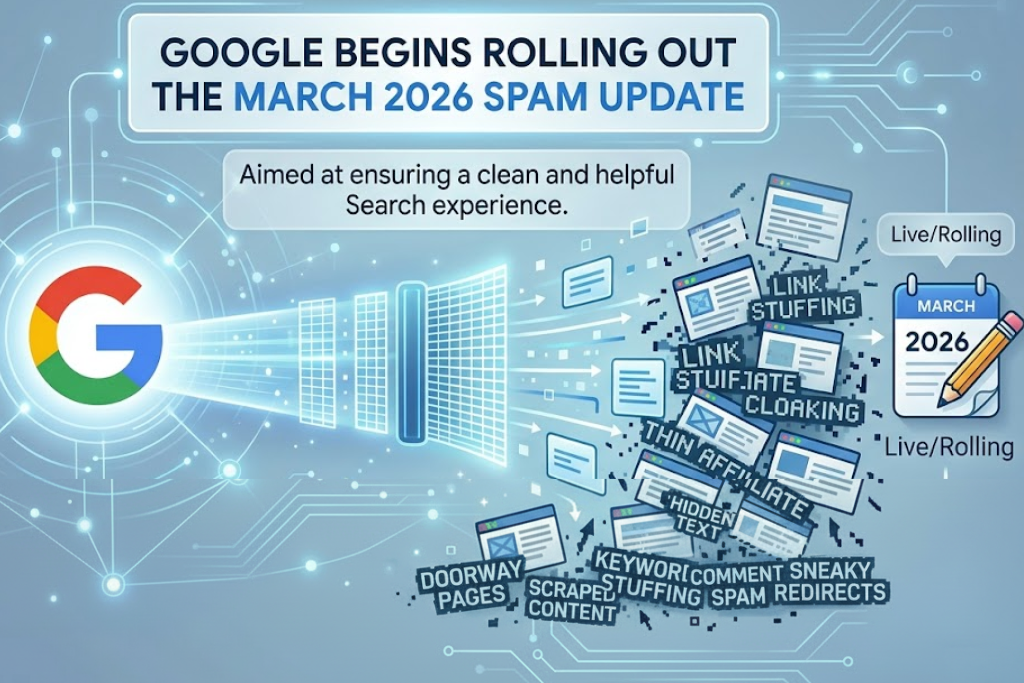
New updates just keep rolling out, and we have the latest Google Spam update on March 24, 2026, and we already expect a full deployment within the next few days. If we talk about SEO professionals, marketers, and businesses, the message we get from this update is consistent with something we expected for a while. The reason is that Google has been signaling for a while that the manipulative practices have a shrinking shelf life in search.
What Is the March 2026 Spam Update?
As per the reports from Search Engine Journal and Search Engine Land, this is a standard spam update rather than a sweeping algorithm overhaul. It applies globally across all languages and focuses on sharpening Google’s spam-detection systems so that sites violating spam policies take the visibility hit they deserve. Google confirmed the rollout via its Search Status Dashboard, noting that full deployment could take a few days.
How Spam Updates Differ from Core Updates
Is it worth clarifying for anyone who might be conflating the two: spam updates and core updates do different jobs. Core updates are about how Google evaluates content quality and relevance. Spam updates are specifically designed to catch sites that are gaming the system.
Google’s spam-detection infrastructure, which increasingly runs on AI, looks for things like cloaking and deceptive redirects, unnatural backlink patterns, scaled content abuse, and low-quality or auto-generated pages. Sites caught in these systems can see ranking drops or get pulled from results entirely.
No New Policies — Just Stronger Enforcement
One thing worth noting about this particular update is that Google hasn’t introduced any new spam policies alongside it. That tells you something about the intent. This isn’t about redefining the rules — it’s about getting better at enforcing the ones we have. Google has been running this playbook for a while now, tightening enforcement without constantly rewriting policy, and the March 2026 update continues that pattern.
Timeline and Context
A bit of context on where this update fits:
This is Google’s first spam update since August 2025, which had a notably longer rollout of nearly four weeks. It follows closely on the heels of the February 2026 Discover update. And unlike that August rollout, this one is expected to move quickly — a sign that the detection systems have become more efficient and don’t need extended time to propagate.
What This Actually Means for Your Site
If your site has been built on ethical SEO practices, you likely won’t feel much from this. The businesses that should be paying attention are those that have relied on tactics that run counter to Google’s guidelines — bought links, thin, auto-generated content, cloaking, and the like.
For sites that do get hit, the impact can include sudden ranking drops, loss of organic traffic, and deindexing of specific pages. Recovery is possible, but Google has been clear that it takes time — months in many cases — as its systems reassess a site’s compliance over multiple crawl cycles. There’s no quick fix here.
AI’s Growing Role in Spam Detection
Google’s SpamBrain system has become increasingly central to how spam updates work. It’s designed to identify abuse patterns at scale and adapt as spammers change their tactics, which is part of why these rollouts have gotten faster and more precise over time. The broader implication for SEO is that AI-driven detection makes it harder to hide low-quality or manipulative practices behind technical workarounds. What gets rewarded now is genuinely useful content, real brand credibility, and consistent value to users — none of which can be faked at scale.
Key Takeaways for SEO Professionals
A few things worth keeping front of mind as this update rolls out:
Volume without quality is a liability now, not an asset. Mass-producing thin content has become riskier with every spam update cycle. Short-term ranking gains from spammy tactics increasingly come with delayed penalties that are expensive to recover from. Trust and authority signals — the kind that come from genuinely good content and real user engagement — continue to be what Google’s systems are optimizing toward. And during any active rollout, it’s worth keeping a closer eye than usual on ranking fluctuations and traffic patterns so you don’t miss problems late.
How Primotech Helps Businesses Stay Update-Proof
Algorithm updates create anxiety, especially for businesses that have invested heavily in their organic presence. At Primotech, our approach to SEO has always been built around what holds up over time rather than what works until the next update. We help clients develop high-quality, authoritative content, stay compliant with Google’s guidelines, and build organic visibility through practices that don’t put them at risk when enforcement tightens. Updates like this one don’t change our strategy — they validate it.
What we think about this update
The March 2026 Spam Update isn’t introducing new rules, but it is a reminder that Google’s ability to enforce the existing ones keeps improving. Sites built on genuine value, real expertise, and honest SEO practices have nothing to fear from it. Sites that have been cutting corners should treat this as a serious prompt to audit what they’re doing and why. In a search environment increasingly shaped by AI, authenticity isn’t just a nice principle — it’s the only durable strategy.