 December 19, 2025
Mobile app development is changing quickly. As we move toward 2026, businesses need more than just basic apps. Today’s digital products must be scalable, cost-effective, secure, and ready to adapt as the user needs to change. Cross-platform app development is becoming the go-to solution for companies that want reliable, future-ready apps.
Users now switch between devices without missing a beat. They expect the same performance and features on every device, whether it’s an iPhone, Android, tablet, or desktop. For businesses, building separate native apps for each platform is costly and hard to manage.
That’s why more companies are choosing cross-platform solutions. With one codebase, you can build an app that works well on every platform. What used to be seen as a trade-off is now a real advantage.
In this blog, we’ll look at why cross-platform apps are set to lead in 2026. We’ll cover what’s driving this change, the latest technology trends, the top tools, and the business benefits that make cross-platform development a smart choice for the future.
Market Shift Toward Cross-Platform App Development
For many years, native app development was seen as the gold standard. Businesses believed that building separate iOS and Android apps was the only way to guarantee performance, stability, and access to device features. While this approach worked, it came with high costs, longer timelines, and complex maintenance requirements.
Cross-platform development is a game changer. Developers can use one codebase for all platforms and still deliver a great user experience. Newer frameworks have solved most of the old performance and feature issues.
The mobile app market is growing fast. By 2026, consumer spending on apps is expected to reach $233 billion. Apps are now essential for businesses to connect with customers, deliver services, and drive revenue.
With more competition, companies can’t afford to waste time or resources. Managing separate native apps means double the work for updates, bug fixes, and security. Cross-platform development makes the whole process faster and simpler. The Stack Overflow Developer Survey reports that over 40% of professional developers now work with cross-platform or hybrid technologies, with adoption continuing to rise year over year.
More developers are switching to cross-platform and hybrid tools. Businesses are following because it matches today’s needs and goals.
Why 2026 Will Be a Defining Year for Cross-Platform Apps
Several critical factors are converging to make 2026 a tipping point for cross-platform development.
Rising Development Costs and Talent Shortages
Rising software development costs are a real challenge. It’s harder and more expensive to find skilled iOS and Android developers. Having two separate teams also makes projects more complicated and slows things down.
With cross-platform development, companies can work with one team instead of two. This lowers hiring costs, makes collaboration easier, and helps businesses launch apps faster. For startups and mid-sized companies, this can mean getting to market quickly instead of facing long delays. According to Gartner, global software development spending has increased by more than 30% over the last five years, mainly driven by talent shortages and wage inflation.
Large enterprises are also changing their approach. Instead of growing multiple native teams, they are working with experienced app development companies that focus on cross-platform solutions. This helps them control costs and keep quality high.
Speed as a Competitive Advantage
Speed is critical in today’s digital world. The faster you launch and improve your app, the better your chances of winning customers. Cross-platform frameworks let you release features on iOS and Android at the same time, instead of waiting for separate releases. According to a McKinsey & Company report, enterprises with high-performing IT organizations report up to 35% higher revenue growth and 10% higher profit margins, highlighting the business value of efficient technology delivery.
Releasing updates together helps teams get feedback faster and respond to users quickly. Shorter development cycles mean you can innovate faster and keep up with changing customer needs.
Improved Performance and Framework Maturity
In the past, many companies worried about cross-platform performance. Early frameworks had issues with lag, animations, and limited access to device features.
But by next year, these issues will be mostly solved. Modern cross-platform frameworks deliver strong performance and easy access to device features like cameras, sensors, and GPS. For most business apps, the difference between native and cross-platform performance is minimal.
Key Trends Driving Cross-Platform Adoption in 2026
Unified Development Across Mobile, Web, and Desktop
Cross-platform development now covers more than just mobile. Many frameworks support mobile, web, and desktop apps from a single codebase. This gives users a consistent experience on every device.
For businesses, this means less duplicated work and faster growth into new platforms. Teams can build on what they have instead of starting over, reaching more users quickly.
AI-Driven Application Development
Artificial intelligence is becoming a core feature of modern apps. From personalized recommendations and chatbots to predictive analytics and automation, AI-powered functionality is quickly becoming a baseline expectation. IDC predicts that over 60% of mobile applications will integrate AI-driven functionality by 2026.
Cross-platform frameworks let you add AI features once and use them across all platforms. This is a big advantage for businesses trying out machine learning or personalization, without rebuilding apps for each device.
Growing Enterprise-Level Adoption
In the past, large companies preferred native development for key apps. That’s changing. Enterprises now use cross-platform frameworks for both customer apps and internal tools. Managing one codebase makes security and compliance easier, especially in industries like finance and healthcare.
When enterprises work with a trusted app development company, cross-platform solutions give them control, flexibility, and long-term value.
Tools Shaping the Cross-Platform Ecosystem
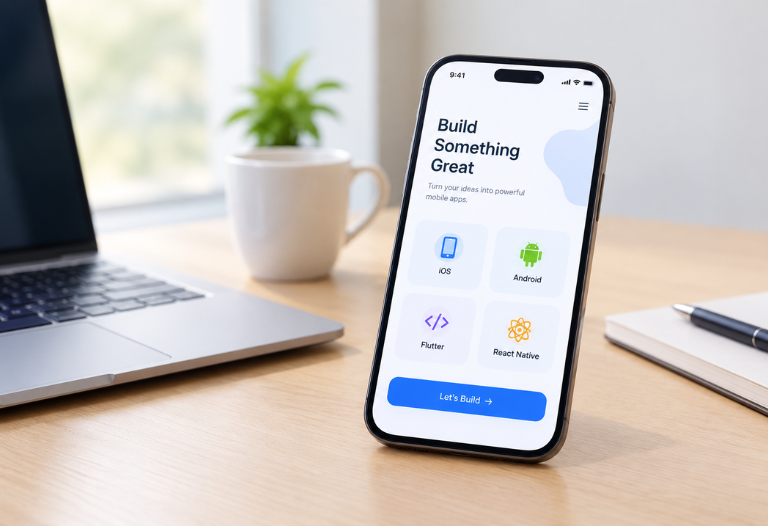
Cross-platform tools will be more reliable and powerful than ever. Each framework has its own strengths, so it’s important to pick the one that fits your business needs.
React Native
React Native remains one of the most widely used cross-platform frameworks. Built on JavaScript, it allows developers to create apps with a native look and feel while sharing a significant portion of code between platforms.
Many businesses choose React Native App Development Services because of the framework’s large ecosystem, strong community support, and compatibility with existing web development teams. It is particularly well-suited for consumer-facing apps, enterprise dashboards, and products that require rapid iteration.
Flutter
Flutter stands out for its rich UI and consistent visuals across platforms. It uses Dart and has its own rendering engine, making it easy to create custom designs.
Flutter is a great choice when you need smooth animation and visual consistency. While app sizes may be a bit larger, many businesses find it worth it for apps with many UI features.
.NET MAUI
.NET MAUI is a good option for companies already using Microsoft tools. Developers can build cross-platform apps with C# and connect easily to existing systems.
This framework is especially useful for large organizations that want to update internal apps without retraining their whole team.
Kotlin Multiplatform
Kotlin Multiplatform lets you share business logic across platforms but still build native UIs. It’s a good fit for Android-first projects that need consistent core features.
These tools create a flexible cross-platform ecosystem, giving businesses several ways to succeed.
Business Advantages of Cross-Platform Apps
Cost Efficiency and Resource Optimization
One of the most compelling benefits of cross-platform development is cost savings. A single codebase reduces development time, testing efforts, and long-term maintenance expenses. Businesses can allocate resources more strategically, focusing on innovation rather than duplication.
Consistent User Experience Across Platforms
Consistency builds trust. Cross-platform apps provide users with the same features and design across devices. This helps your brand and keeps users happy.
Simplified Maintenance and Long-Term Scalability
With one codebase, updates and bug fixes are much easier. As your business grows, you can scale your app without having to start over.
Faster Market Expansion
Launching on multiple platforms at once helps businesses reach more people faster. This is a big advantage for startups and global brands entering new markets.
Comparing Cross-Platform vs Native
| Criteria | Cross-Platform Development | Native Development |
| Development Speed | Faster due to shared codebase across platforms | Slower as separate apps are built for iOS and Android |
| Development Cost | Lower overall cost with one team and one codebase | Higher cost due to multiple teams and duplicated effort |
| Code Reusability | High (70–90% shared code possible) | Very low or none |
| Performance | Near-native for most business applications | Best possible performance |
| User Experience | Consistent experience across platforms | Platform-specific, highly optimized |
| Maintenance & Updates | Easier and faster with unified updates | More complex and time-consuming |
| Scalability | Easier to scale across devices and platforms | Scaling requires additional development |
| Time to Market | Faster launches on iOS and Android simultaneously | Staggered releases are common |
Strategic Considerations for Business Leaders
For CTOs, product managers, and founders, cross-platform development makes planning easier. One architecture means less complexity, better security, and simpler compliance.
Partnering with an experienced app development company ensures your cross-platform solution is built for growth and performance. The right team will help you pick the best framework, plan for the future, and avoid common mistakes.
Measuring ROI from Cross-Platform Development
Cross-platform development offers more than just cost savings. Faster launches, better user retention, easier maintenance, and more flexibility all add up to long-term value.
By next year, companies using cross-platform strategies will be ready to adapt to new devices and customer needs without rebuilding their apps.
Frequently Asked Questions (FAQs)
1. Are cross-platform apps suitable for enterprise-scale applications?
Yes. Modern frameworks can support complex architectures, large user bases, and enterprise-grade security when implemented correctly.
2. Does cross-platform development compromise app performance?
For most business applications, performance differences are minimal due to framework optimization and native integrations.
3. Is cross-platform development more cost-effective than native?
Yes. Shared codebases can help reduce development and maintenance costs while speeding up delivery.
4. Can cross-platform apps access native device features?
Yes. Cross-platform frameworks support native APIs, and custom modules can be added when needed.
5. How do businesses choose the right cross-platform framework?
The decision depends on business goals, UI complexity, performance needs, team expertise, and long-term scalability plans.
Conclusion
By next year, cross-platform app development will be the standard for most businesses. Higher development costs, talent shortages, the need for faster releases, and the need for better frameworks are all driving this change.
Cross-platform apps deliver speed, scalability, and cost savings without sacrificing user experience. Whether you’re a startup or an enterprise, cross-platform development gives you a solid foundation for the future.
If you’re planning your next mobile move or need a reliable app development partner, investing in cross-platform solutions now will set your business up for long-term growth beyond 2026.