 October 12, 2026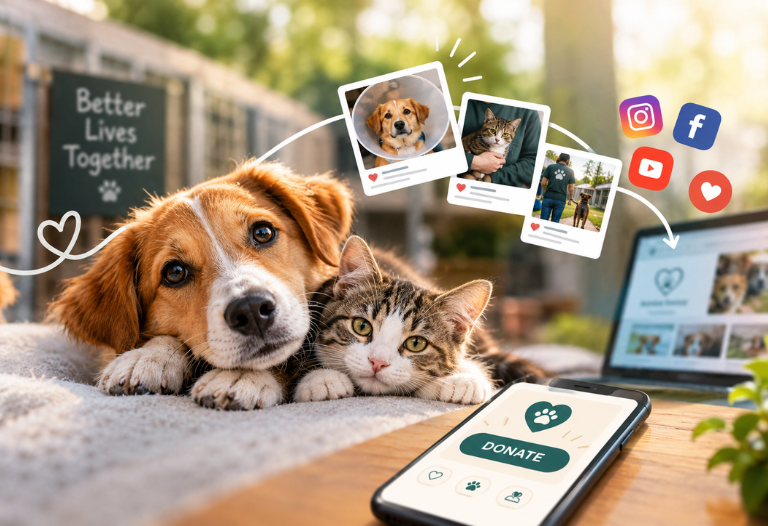
Most people do not plan their day around finding an animal welfare organization to support. They come across these causes in ordinary moments, while scrolling through social media, searching for help after finding an abandoned animal, or reading about a rescue that urgently needs treatment. A story, photo, or simple appeal for help can turn that moment into action. Someone might share it, send it to a friend, volunteer, or decide to donate. The challenge for an animal welfare nonprofit is making sure those moments of connection happen in the first place.
For many shelters and rescue organizations, the work itself is never the problem. There are animals to care for, foster homes to coordinate, adoption enquiries to answer, volunteers to manage, and veterinary needs to handle. What often gets pushed aside is the digital work that helps people outside the organization to see what is happening and understand where their support is needed. A rescue may have a powerful story to tell, but if it reaches only the people who already follow the organization, its ability to bring in new supporters remains limited.
Digital marketing helps close that gap. Search, social media, paid advertising, content, email and a well-planned website give nonprofits more opportunities to reach people who are already looking for ways to help. More importantly, these channels allow an organization to show what happens after someone decides to get involved, whether that means funding an animal’s treatment, opening their home as a foster, volunteering, adopting or becoming a regular donor.
For animal welfare organizations, the goal is not simply to ask more people for money. It is to help more people see the work, understand the need and find a meaningful way to become part of it. This article explains how animal welfare nonprofits can use digital marketing to reach potential donors, build lasting relationships and encourage more people to get involved
Your Organization Has the Stories. More People Need to See Them
Animal welfare organizations rarely have a shortage of meaningful stories. There are animals recovering from injuries, volunteers giving their time, foster families opening their homes, and pets finding permanent homes. The challenge is getting these stories in front of people who have not yet connected with the organization.
Someone might be searching for a local animal shelter, considering fostering a dog, or looking for a cause to support. If an organization has little online visibility, it misses opportunities to connect with potential donors and supporters.
Animal Charity Evaluators have highlighted how individual animal stories can attract wider attention. Its example of Jubilee, a Siberian husky whose story was shared on Facebook, illustrates how one animal’s situation can reach people beyond an organization’s existing audience.
However, reaching more people is only part of the goal. The story also needs to give them a reason to care and understand how they can help.
Start With the Impact, Not Just the Donation Request
Fundraising appeals often focus on immediate needs, such as veterinary bills, food supplies, or emergency treatment. These requests are important, but repeatedly asking for donations without showing the situation behind them can make it harder to hold supporters’ attention.
Best Friends Animal Society encourages animal welfare organizations to use compelling, beneficiary-focused stories in their fundraising communications. Instead of presenting animal welfare as a broad problem, organizations can help supporters connect with the individual animals their contributions benefit.
For example, compare these two messages:
“We need donations to help cover veterinary expenses.”
“Buddy arrived with an injured leg and needs surgery before he can begin looking for a home.”
The second message gives readers a clearer picture of the need and what their support could help accomplish.
Stories should also show what happens after the appeal. Updates about an animal recovery, a successful adoption, or a foster family providing a safe home to help supporters see the results of their contributions. These moments offer meaningful reasons to stay involved beyond a single donation.
Animal welfare nonprofits already have these stories. Digital marketing helps them share those experiences through social media, website articles, fundraising pages, and email updates, reaching people through the channels they use.
For example, one rescue story could become a social media series, a fundraising page explaining the cost of treatment, and a follow-up email showing the animal’s progress. Each piece serves a different purpose while keeping the message grounded in the animal’s actual journey.
Is Your Google Ad Grant Going Unused?
Get expert help with campaign structure, conversion tracking, and landing pages so your grant works harder for your animals.
Be Visible When Someone Is Already Looking for Help
Not every potential donor will discover a nonprofit through social media.
Someone might search: “animal shelter near me”, “donate to an animal rescue”, “dog foster program”, “cat rescue in Austin”, “animal shelter volunteer opportunities”.
These searches are different from someone casually scrolling through their social feed. The person is already looking for something.
SEO helps an organization build pages and content around the questions and services that matter to its audience. A nonprofit might have dedicated pages for donations, fostering, adoption and volunteering, along with local pages and useful articles that answer common questions.
Paid search adds another opportunity to appear when relevant searches happen.
The goal is not to rank for every animal-related keyword. It is to focus on searches that connect with the organization’s actual work and priorities.
For example, a rescue that urgently needs foster families has a different marketing priority from one trying to increase recurring donations. The pages, keywords, ads and calls to action should reflect that difference.
At Primotech we approach SEO by looking at search intent, technical performance, content, local visibility and the overall user journey rather than treating keywords as the entire strategy. Its SEO services include technical optimization, on-page work, content optimization, local SEO and performance tracking.
For nonprofits, those elements need to lead somewhere useful. If the priority is fostering, the visitor should quickly find the foster information. If donations are the priority, the donation path should be easy to understand.
A Google Ad Grant Is Useful, but Managing It Is a Different Job
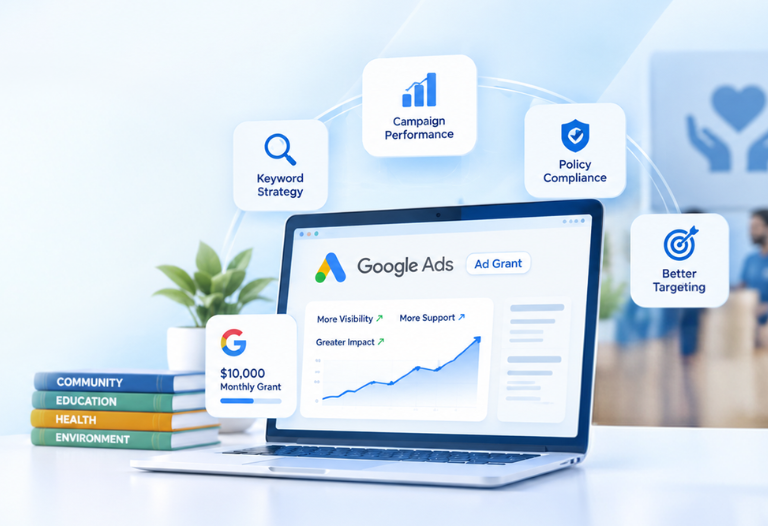
Google Ad Grants is an opportunity for eligible animal welfare nonprofits to access up to $10,000 USD per month in Google Search advertising credit. The program helps nonprofits raise awareness, attract donors, and recruit volunteers, but eligibility requirements apply, and receiving the grant does not guarantee that the full amount will be spent.
Managing the account also takes ongoing work. Nonprofits need to select relevant keywords, create campaigns, monitor performance, maintain conversion tracking, and ensure their ads lead to useful landing pages. For teams already managing animal care, volunteers, and fundraising, keeping up with these tasks can be challenging.
How Primotech Helps Nonprofits Manage Google Ad Grants
Primotech provides ongoing Google Ad Grant management, including campaign optimization, targeting improvements, conversion tracking, and landing-page reviews.
In a 2026 case study, Primotech reported helping an animal welfare organization increase Grant utilization from around 18% to 96%, achieve a 76% increase in conversions, and reduce cost per donation by 53% through campaign restructuring and other optimizations.
These results will vary by organization, but the case illustrates why effective Grant management involves more than simply securing advertising credit.
Do Not Send Every Visitor to the Homepage
Imagine someone searches for a way to foster a dog, clicks a nonprofit’s Google ad and lands on a homepage filled with information about donations, events, adoption, news and the organization’s history.
The person has to figure out where to go next.
That extra effort might seem small, but it matters. Someone searching for fostering should be able to understand the fostering process without having to search through the entire website. Someone responding to an emergency fundraising appeal should arrive at a page that explains the need and gives them a clear way to help.
Media Cause makes a similar point in its discussion of Google Ad Grants for animal welfare organizations. It recommends directing search traffic to specific landing pages based on what people are interested in instead of sending every visitor to the homepage.
Paid ads work better when the landing page matches what someone searched for. Primotech applies this principle by reviewing page content, calls to action, and conversion paths to help nonprofits make it easier for visitors to take the next step.
Getting someone to the website is only half the job. The page also needs to make it clear how they can help.
Donors Need to See What Their Support Is Doing
A donation is not necessarily the end of a relationship. Someone who gives $25 today might give again next month if they understand what their support helped accomplish and continue to feel connected to the organization. Someone who donated during an emergency might later become a monthly donor, volunteer or advocate if the nonprofit keeps communicating with them.
That is why digital marketing should include what happens after the donation.
Thank supporters. Show progress. Share successful outcomes. Explain what needs to be done. When possible, connect the results back to the animals and communities being served.
Fundraising guidance from established animal welfare organizations also points to the value of positive communication, beneficiary-focused stories and helping supporters see how their contribution becomes part of the solution.
Email can play an important role here, but it does not need to become a stream of fundraising requests. A healthy supporter relationship might include rescue updates, adoption stories, volunteer opportunities, educational information and occasional fundraising appeals. The organization stays present without making every interaction feel like another request for money.
Measure the Help, Not Just the Attention
A campaign that receives 100,000 impressions looks impressive until you ask what happened after people saw it.
Did anyone donate?
Did more people apply to foster?
Did adoption enquiries increase?
Those questions tell an animal welfare organization much more about the value of its marketing. This does not mean impressions, reach or engagement are useless. They help explain whether a message is being seen and how audiences are responding. But they should not be the only measures reported to a nonprofit leadership team.
Primotech can connect campaign activity with conversion tracking, so the organization has a clearer view of what happens after someone interacts with an ad, search result, social post or landing page. Our PPC services include conversion tracking, audience targeting, ongoing testing and performance reporting, while our broader digital marketing approach brings SEO, PPC, social, content and CRO together around the user’s journey.
Tracking these results helps nonprofits understand which campaigns are bringing in donations, attracting volunteers, and connecting them with potential supporters.
What Does Primotech Actually Do for an Animal Welfare Nonprofit?
Animal welfare teams already have plenty to manage, from caring for animals to coordinating volunteers and raising funds. Keeping up with digital marketing on top of all that is not always easy. Primotech helps by understanding what the organization needs most, whether that means more donations, foster families, adoption enquiries, volunteers or greater awareness in the local community.
Once those priorities are clear, we look at the organization’s existing online presence and where things could improve. This might involve SEO, Google Ad Grants, paid advertising, social media, or website updates. The aim is to focus on what will help the organization reach its goals rather than trying to do everything at once.
A big part of this work is sharing the stories behind the cause. We help turn real rescue experiences into content people can connect with, whether that is a story about an animal’s recovery, a fundraising page explaining an urgent need, or a social media campaign encouraging people to foster or adopt. Paid campaigns and website improvements help make it easier for interested people to take the next step.
The work does not stop once a campaign goes live. Our digital marketing company reviews what is working, which campaigns are bringing in responses and where visitors are dropping off. These insights help guide improvements over time, while giving the nonprofit team more room to focus on the animals in its care.
Turn Your Mission Into Meaningful Support
Your work deserves to reach more people who care about animal welfare. If your organization is looking to attract more donors, increase awareness, or build stronger supporter relationships, we can help you get there with the right digital marketing strategy. Explore Primotech’s digital marketing services for nonprofits or contact our team to discuss how we can help your organization reach more supporters and turn greater visibility into meaningful action.
Frequently Asked Questions
1.) What digital marketing channels are most useful for animal welfare nonprofits?
There is no single channel that works equally well for every organization. Search can help people find a nonprofit when they are actively looking for ways to donate, foster, adopt or volunteer, while social media can help organizations tell stories and maintain relationships with existing supporters. Email, paid advertising, content and a well-structured website can then support those channels and help move people from awareness to action.
2.) Can animal welfare nonprofits use Google Ad Grants?
Eligible nonprofits can apply for Google Ad Grants, which provides up to $10,000 USD per month in Search advertising credit. Eligibility and ongoing program requirements apply, and Google notes that the full amount is not guaranteed to be spent each month.
3.) What should an animal welfare nonprofit promote through Google Ads?
That depends on the organization’s priorities. A rescue might promote donation campaigns, foster programs, adoption services, volunteer opportunities or educational resources. The strongest campaigns usually connect a specific search intent with a relevant page rather than sending every visitor to a general homepage.
4.) Can Primotech manage our nonprofit’s digital marketing?
Primotech can support animal welfare organizations across areas such as SEO, PPC, Google Ad Grants, content marketing, social media and conversion optimization. The approach is built around the organization’s specific goals, with campaign performance and meaningful actions used to guide ongoing improvements.
5.) What should we do if our Google Ad Grant is underused?
Start by looking at why the account is not spending effectively. Low search volume, weak targeting, restrictive bidding, poor ad quality, limited geographic targeting or missing conversion tracking can all affect delivery. Google specifically recommends reviewing these areas, while Primotech can audit the account, restructure campaigns, improve tracking and align the advertising with the nonprofit’s actual goals.