 November 25, 2025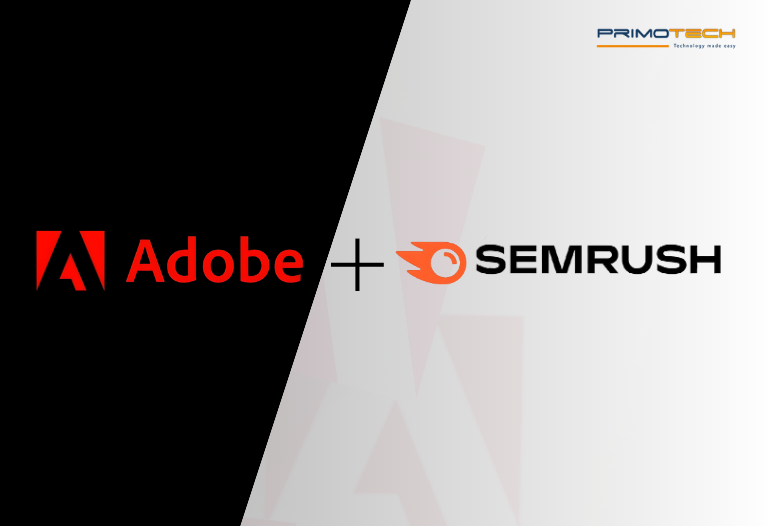
Adobe recently announced it will acquire Semrush.
And that news quickly went viral worldwide and became really popular amongst us marketers.
If you don’t know it yet, the deal is for about $1.9 billion.
This is a clear bet on SEO and brand visibility as AI changes search.
What do I think? Here’s my quick take
With Adobe getting access to Semrush’s SEO and GEO data and tooling, it will have a major impact on their own marketing capabilities.
And for us as users, it brings deep visibility data into a powerful marketing and analytics ecosystem. This move also shows where search is heading.
You no longer rely on classic search alone. AI assistants, chat models, and answer engines are now a new discovery layer. People ask questions. AI answers instantly. The path to your brand looks different.
Visibility has a new meaning. It is now about how well your content is understood, ranked, and surfaced by both search engines and AI systems.
If AI cannot interpret your content, it will not show your brand. If search engines cannot connect your relevance to user intent, your reach drops. That is the new reality.
With Semrush inside Adobe, I am confident we will see tighter links between content, analytics, and distribution. The walls between insights, production, and measurement will get thinner. Teams will be able to act on data faster.
- Insights that once lived in separate tools will sit closer together.
- Planning will be simpler.
- Production will be more informed.
- Optimization will be continuous.
- Tracking will be clearer.
- Reporting will be cleaner and more accurate.
And brands will finally have a unified view of how they show up in AI-powered search results.
SEO impact | immediate and medium term
We all know how fast the search landscape is changing, and in just the last 3 years, the shift has been astronomical.
People are no longer typing simple queries. They ask LLMs, AI assistants, voice interfaces, and chat systems for answers.
These tools filter content differently. They summarize. They interpret. They decide which sources matter. This shift changes the exact moments where brands can be discovered.
Semrush gives us clear signals about keywords, SERP features, backlinks, topic clusters, and how content performs in traditional search.
Adobe adds scale, analytics, automation, and content orchestration. When these two come together, brands get a broader visibility map.
They can track how they show up across classic search and AI response layers, not just one or the other.
I strongly believe that in the immediate term, teams will get faster insights. They will connect intent data with content opportunities in seconds.
They will see gaps that were previously hidden. They will know which topics matter, which pages need upgrades, and which formats produce visibility in generative answers.
But with time and in the medium term, workflows will evolve.
Content teams, SEO teams, and analytics teams will work off the same data foundation. Signals from Semrush will flow into planning tools.
Adobe Analytics will connect engagement and conversions.
Creative teams will build assets with visibility baked in from the start.
Data on what users ask AI will become easier to link to content plans.
– You will know which questions AI assistants answer.
– You will know if your pages are being cited or ignored.
– You will know exactly what to create next.
SEO metrics will plug into creative and analytics workflows.
– Writers will get clearer briefs.
– Designers will know the formats that rank.
– Analysts will understand how search and AI influence performance.
Brands that ignore AI search now risk losing discoverability.
– They risk losing authority.
– They risk losing market share.
The winners will be the brands that adapt early, use the data, and build content that works across both search engines and AI systems.
AI SEO impact
AI changes the interface. Users interact with answers, not pages. LLMs respond instantly. They summarize. They reduce the need to click. This creates a new challenge for brands.
You need to be present in the data that AI models rely on. If you are missing, you are invisible.
Semrush already maps the web at scale. Adobe can use that map to strengthen how its AI systems understand content.
That means AI models can learn which pages deserve visibility, which domains hold authority, and what sources should be surfaced more often.
AI SEO now requires brands to think about how machines interpret content.
It is not just about keywords.
It is about structure, clarity, consistency, depth, and trust signals.
It is about being the kind of content an AI model wants to use as a reference.
Here is what to expect:
Better signals for optimizing content that AI will cite
Models look for reliable, well-structured content.
With Adobe using Semrush’s data, brands will get clearer indicators of what makes a page “AI-friendly.”
This includes semantic patterns, topic coverage, and authority cues that help LLMs pull your content into answers.
Integration of Semrush insights into analytics and content tools
AI SEO becomes more measurable when search data and business data live together.
Adobe can combine Semrush’s insights with performance analytics, user behavior, and content engagement.
Teams will see how AI answers influence discovery, how content contributes to those answers, and where improvements are needed.
New GEO workflows that treat LLMs as a search channel
Generative engine optimization becomes a real discipline.
Brands will optimize for AI assistants the same way they optimized for search engines. They will map AI queries, identify gaps, and build content that aligns with the questions people ask in these new environments.
Adobe’s platform can turn this into repeatable workflows.
AI SEO is no longer optional. It is now part of the visibility stack.
And with Adobe and Semrush joining forces, the tools to navigate this new landscape will become much stronger, more connected, and more actionable.
What business and marketing teams can expect
Business and marketing teams will notice an immediate shift in how their work connects.
The silos that once separated content, paid media, SEO, and analytics will start to close. Teams will see more of the full picture.
They will see how ideas move from strategy to execution to performance without losing context.
This means fewer blind spots. It means fewer delays. It means fewer disconnected tools and fewer manual steps.
Campaigns will move faster because everyone is working off the same insights.
AI also changes how we measure success. Organic and paid signals will blend. User journeys will include traditional search, AI assistants, and generative interfaces.
With Adobe and Semrush combined, those paths will be easier to track and analyze.
What you will notice:
Faster content decisions using combined SEO and analytics signals
Teams will know which topics matter right now. They will see intent shifts and performance changes in real time. This leads to faster pivots, cleaner content calendars, and more confident planning.
Unified reporting that ties content creation to visibility and conversions
Performance dashboards will show the full chain from idea to impact. You will see how each piece of content performs, how it contributes to visibility, and how that visibility drives conversions or leads. This gives leadership clearer insight and gives teams better direction.
New vendor options for enterprise stacks that want one partner for content, creative, and search visibility
Large organizations can consolidate tools instead of stitching together multiple platforms. One ecosystem means fewer integration issues, fewer subscription costs, and a cleaner workflow for global teams.
How Primotech already uses Semrush
We rely on Semrush as a core part of our workflow. It powers our research, our strategy, and our execution.
We use it to identify opportunities before competitors find them.
We use it to track rankings, backlinks, and site issues before they become problems.
We combine Semrush data with our own analytics layers to shape content ideas and technical plans.
This allows us to create briefs that are backed by real user intent. It helps our writers produce content that ranks. It helps our SEO team make decisions that deliver quick wins and long-term growth.
Semrush also feeds our reporting dashboards. Clients get clear insights into what is working and why.
They see performance patterns that guide future campaigns. And they benefit from a process that is driven by data at every step.
This is why we are excited about the Adobe acquisition.
It strengthens a tool we already use daily. And it opens up new ways for us to deliver even more value to our clients.
What it means for our clients and us
Adobe’s acquisition expands what Semrush can deliver. It unlocks a wider set of tools and deeper insights.
This gives us new ways to elevate the work we do for our clients. We will use richer data, faster workflows, and stronger automation to build smarter strategies.
This update creates new opportunities for us to help you (our clients) win. It also gives us a chance to improve how we build, optimize, and measure campaigns from start to finish.
Our goal is simple.
More visibility. More conversions. More predictable results.
We want our clients to grow with confidence and know that their investment leads to measurable impact.
Here are the targets we will pursue:
Increase discoverability across AI and search
We will make sure clients appear where users ask questions. Whether it is an AI assistant or a traditional search engine, the goal is consistent visibility in the moments that matter.
Reduce the time from insight to content live
We will shorten the time it takes to go from research to published content. This leads to faster wins and less wasted effort. Teams can act on trends while they are still fresh.
Tie visibility gains to revenue through unified measurement
We will connect search performance, AI visibility, engagement, and conversions into one reporting system. This shows the real impact of SEO and content on business growth.
A pragmatic note on timing and risk
The deal is expected to close in the first half of 2026 once approvals are complete. The transition will not be instant. Integrations will roll out over time.
Tools and APIs may change as Adobe reorganizes how Semrush fits into its product suite.
We will monitor these shifts closely. We will adjust as changes occur.
We will protect current workflows until new integrations are stable and reliable.
Clients will not face disruption. They will get the benefits as soon as they become available.
At Primotech, we are already moving in that AI search-first direction. We use Semrush every day. We are building new AI SEO and marketing packages that bring together everything Adobe and Semrush can offer.
If you want a custom plan, we can build it.
If you want a proposal with expected visibility gains and revenue impact, we can create it.
Tell us about your goals, and we will show you how we can move the needle.
Ready to get started?
Feel free to reach out to me for a quote and a tailored proposal. Drop me an email at [email protected]