 October 21, 2026
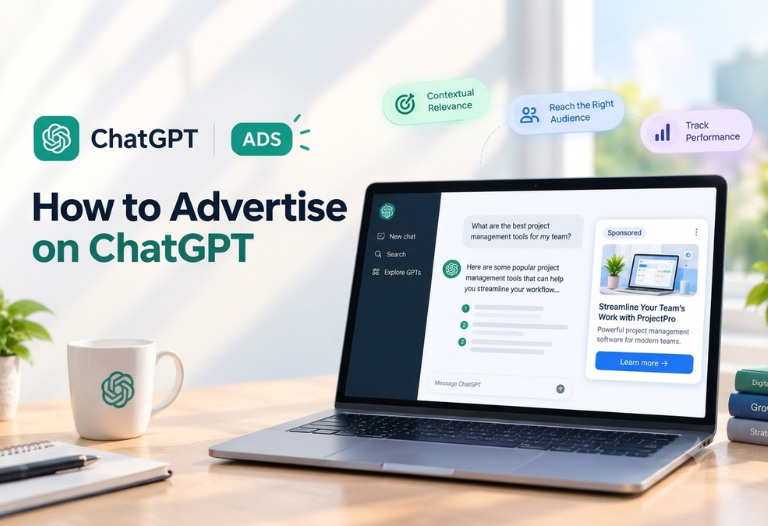
When people use ChatGPT to compare products, research services, or explore solutions to everyday problems, businesses have a new opportunity to reach potential customers. ChatGPT Ads introduce paid advertising into these conversations, giving brands another way to connect with people while they consider their options.
OpenAI has launched Ads Manager Beta, where eligible businesses can create campaigns, manage budgets, and track advertising performance. However, advertising on ChatGPT works differently from traditional search advertising. The platform considers the context of a conversation, the relevance of an offer, and other signals when selecting advertisements.
For businesses exploring new digital marketing channels, understanding how ChatGPT Ads work is the first step. This guide explains how the platform operates, who can advertise, how to get started, and how Primotech can help businesses prepare for this emerging advertising opportunity.
What Are ChatGPT Ads?
ChatGPT Ads are paid promotional placements that allow businesses to showcase their products or services within the ChatGPT experience. They are clearly labelled as advertisements and displayed separately from ChatGPT’s answers.
For example, someone researching accounting software for a small business might encounter an advertisement for a relevant software product. Similarly, a person exploring home improvement options might see an ad for related products or services.
The purpose is to connect relevant offers with people who are actively exploring a subject. Unlike traditional search advertising, where keywords often play a central role, ChatGPT Ads also consider conversational context.
According to OpenAI’s advertising documentation, ad selection considers signals such as conversation context, ad content, landing pages, and advertiser-provided context hints.
An important distinction is that advertisements do not influence ChatGPT’s answers. Businesses pay for advertising placements, not for the chatbot to recommend their products.
How Do ChatGPT Ads Work?
ChatGPT Ads use an advertising auction to select eligible ads based on expected relevance and outcomes. Advertisers configure their campaigns, while the platform determines which advertisements are suitable for available placements.
1. Ads Match the Context of a Conversation
Traditional search ads often target specific search terms. ChatGPT Ads take a broader approach by considering the intent and context of a conversation.
For instance, someone comparing project management tools might find an advertisement for software designed to help teams organize tasks and manage deadlines.
Advertisers can provide context hints describing relevant topics, conversations, or keywords. These hints guide ad matching, but they do not guarantee placement in a particular conversation.
2. Advertisements Appear Separately From Answers
ChatGPT Ads are labelled separately from the chatbot’s responses. Depending on the ad, users may see elements such as the advertiser’s name, headline, description, image, and destination page.
This separation helps users distinguish paid promotions from organic responses. OpenAI also applies advertising policies and safeguards intended to prevent ads from appearing in sensitive or unsuitable contexts.
3. Businesses Choose Campaign Objectives
Advertisers can select campaign objectives based on what they want to achieve. Current options include Views, Clicks, and Conversions, with pricing and optimization depending on the selected objective and available campaign settings.
Views campaigns focus on visibility, Clicks campaigns focus on website traffic, and eligible Conversions campaigns optimize delivery towards supported actions such as purchases, sign-ups, or lead submissions.
4. Campaign Performance Can Be Measured
Ads Manager Beta provides reporting for impressions, clicks, spending, click-through rate, average cost per click, average cost per thousand impressions, and conversions when measurement is configured.
Businesses can also use UTM tracking parameters to identify campaign traffic in their existing analytics tools. This helps them evaluate whether advertisements attract relevant visitors and contribute to meaningful business outcomes.
Thinking About Advertising on ChatGPT?
Get expert help with campaign setup, landing pages, and conversion tracking so your ChatGPT Ads budget works harder.
Who Can Advertise on ChatGPT?
ChatGPT Ads may suit businesses that want to reach people while they research products, compare services, or evaluate solutions. However, participation depends on country availability, account requirements, and compliance with OpenAI’s advertising policies.
Potential advertisers include:
- Ecommerce businesses: Retailers promoting products to people researching purchases.
- Software and technology companies: Businesses offering applications, subscriptions, and digital tools.
- Professional service providers: Agencies and service businesses looking to attract potential clients.
- Home and lifestyle brands: Companies offering furniture, renovation products, and related services.
- Education and training providers: Businesses promoting eligible courses and learning services.
These are potential use cases, not a guarantee of approval. Businesses should review the official advertising policies before planning a campaign.
Can Small Businesses Advertise on ChatGPT?
Yes. Eligible small businesses do not necessarily need to work through a large advertising agency to get started. OpenAI’s self-service Ads Manager provides a direct route for businesses in supported countries.
India is currently listed as a supported country for self-service access. However, account creation alone does not guarantee campaign access or approval. Businesses must meet the applicable account, billing, and advertising requirements.
How to Advertise on ChatGPT: A Step-by-Step Guide
Businesses interested in how to advertise on ChatGPT can begin by visiting OpenAI Ads Manager. The following steps outline the main stages of setting up a campaign.
Step 1: Check Your Eligibility and Set Up Your Account
Review the Ads Manager availability list to confirm whether your business’s country is supported. Sign in to the platform, provide the required business details, and complete the account setup process.
Step 2: Choose a Campaign Objective and Budget
Decide whether your priority is visibility, website traffic, or supported conversions. Set a daily or campaign-total budget according to your marketing goals and available resources.
Review the billing model and bidding options for your chosen objective. During the beta period, available features and campaign requirements may change.
Step 3: Create Relevant Ad Content
Write headlines and descriptions that explain what your business offers and why it matters to the intended audience.
For example, a software company could promote a tool by highlighting how it helps small teams organize projects and meet deadlines. Clear, specific messaging gives people a better understanding of the offer than broad claims about being the best solution.
Step 4: Choose the Right Landing Page
Direct visitors to a page that matches the advertisement. The landing page should explain the offer, answer relevant questions, and make the next action clear.
Depending on the business, that action could be purchasing a product, booking a consultation, requesting a quote, or signing up for a service.
Step 5: Launch and Measure Results
Review the campaign settings, complete billing setup, and submit your ads for approval. Once the account and campaign meet the necessary requirements, the ads can begin delivering.
Track impressions, clicks, spending, and conversions where configured. Use the results to identify which messages and landing pages attract relevant visitors and contribute to business goals.
How Primotech Can Help Businesses Prepare for ChatGPT Ads
Launching an advertising campaign is only one part of reaching potential customers. Businesses also need relevant messaging, a well-prepared website, clear conversion goals, and a reliable way to measure performance.
At Primotech, we help businesses build their digital marketing strategies through SEO, paid advertising, content marketing, and conversion rate optimization. These services support the marketing foundations businesses need when exploring new advertising channels.
For example, a company promoting a software product need more than an advertisement. Its messaging should explain the product’s value, its landing page should address customer concerns, and its analytics should help measure enquiries or purchases. Primotech can help businesses bring these elements together as part of a broader marketing strategy.
Although ChatGPT Ads performance depends on campaign eligibility, audience relevance, and platform delivery, businesses can prepare by improving their digital presence and setting measurable objectives before investing in a new channel.
ChatGPT Ads vs. Google Ads: What’s the Difference?
ChatGPT Ads do not automatically replace Google Ads. Businesses should evaluate both channels according to their audience, marketing objectives, budget, and measured results. Both platforms offer paid advertising opportunities, but they approach ad delivery differently.
| Factor | ChatGPT Ads | Google Search Ads |
| Main context | AI conversations | Search queries |
| Relevance signals | Conversation context, ad content, and other signals | Keywords, search intent, bids, and other signals |
| Main opportunity | Reach people exploring a topic through ChatGPT | Reach people searching for specific products or services |
| Measurement | Ads Manager reporting and conversion tracking | Google Ads reporting and conversion tracking |
Best Practices for Businesses Using ChatGPT Ads
Before investing in ChatGPT Ads, businesses should focus on a few practical considerations.
- Understand your audience: Identify the problems customers want to solve and connect your offer to those needs.
- Write specific ad copy: Explain the product, intended audience, and practical benefits without exaggerated claims.
- Improve landing pages: Ensure the destination provides useful information and makes the next step easy.
- Measure meaningful outcomes: Look beyond clicks to assess qualified enquiries, purchases, and conversion costs.
- Test before scaling: Start with a manageable budget, review performance, and adjust campaigns based on reliable results.
Why Choose Primotech for Your Digital Marketing Strategy?
Primotech is a global technology and digital marketing company helping startups, SMBs, and enterprises improve their online presence through SEO, paid advertising, content marketing, CRO, and AI-focused solutions.
For businesses exploring ChatGPT Ads, our company develops relevant content, optimize landing pages, and measure campaign performance to support informed marketing decisions. We focus on connecting marketing activities with clear business goals. Our team helps businesses evaluate new advertising opportunities alongside their existing channels. This approach supports smarter marketing decisions based on audience needs and measurable results.
Exploring ChatGPT Ads for your business? Connect with Primotech to discuss your digital marketing goals and identify the right next steps for your business.
Frequently Asked Questions
How much does it cost to advertise on ChatGPT?
Costs depend on the campaign objective, bidding, delivery, and selected billing model. ChatGPT Ads supports impression-based and valid-click billing, with additional options for eligible conversion-optimized campaigns. Check out the current Ads Manager settings before deciding on a budget.
Are ChatGPT Ads available in India?
India is listed as a supported country for self-service Ads Manager access. Individual advertisers must still meet the applicable account, billing, and campaign requirements.
Do businesses need specific keywords to advertise on ChatGPT?
Advertisers can provide context hints, including relevant topics and keywords, but these do not work as exact-match targeting guarantees. The platform considers multiple relevance signals when selecting advertisements.
How can businesses measure ChatGPT Ads performance?
Businesses can monitor impressions, clicks, spending, click-through rate, average CPC, average CPM, and supported conversions. UTM parameters and conversion tracking provide additional insight into website activity and campaign outcomes.
Do ChatGPT Ads influence ChatGPT’s answers?
No. OpenAI states that advertisements remain separate from ChatGPT’s answers and do not influence the chatbot’s responses.